

Getting to country 151 was not difficult, but it was a bit tiring since the flights flew at inconvenient hours. My flight left from Dakar at 03:00 and arrived in Cabo Verde at 5:30am. Why in the world do they have to make the departing times so inconvenient? I left my host Yumie’s place at midnight and got a taxi to the airport for 2500F. This time, I was surprised the taxi driver quoted the correct price, nothing absurd like 5000F.
I got to the airport in about 20 minutes and basically slept on one of the seats until checkin commenced. In case you do go to the airport in the future, take bug spray since there were a lot of mosquitos and I got a few bites, despite pounding deet on my body.
When I tried to checkin, they did not find my information in the system and I thought I booked the wrong date or perhaps the wrong city again? If you read my post on Porto Santo, I went to Porto Santo instead of Porto on the mainland by mistake. I had all the information in my email and showed them the confirmation number. It was still not in the system. Finally, I followed the manager on duty to the airline’s operation room, which was on the 3rd floor of the building in a shady and dirty area. There was no airconditioning and it was very humid. Besides, I carried my two backpacks up the stairs in the heat and that was not cool. In the operation room’s system, he was able to find my confirmation number and I took it down to the counter to checkin.
Around one and a half hours later in the air, we arrived in Praia, Cabo Verde. At immigration, I got my visa on arrival for 25 Euros and immigration went smoothly. I got my bag and proceeded towards the taxi stand. I knew where I was going, since I already booked my room at the Praiadise Hostel for two nights and had to find transportation from the airport. The distance was only 10km, but the hostel quoted me 15 Euros for pickup, which seemed like an awful lot for Africa. Once I got out of the airport, a taxi driver quoted 10 Euros, and I bargained down to 7 Euros. Besides, I split the ride with another backpacker who was going towards the same direction. After all, it only cost me 3.5 Euros. It was around 6:20 am when I got to the hostel and I had an entire 6-bed dorm room to myself. I slept like a baby until 11am.
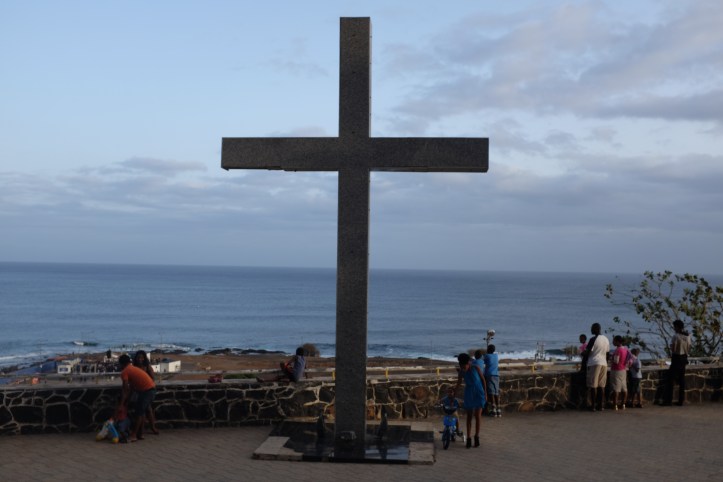
Santiago Island was the biggest out of the eight main islands and it was the administrative capital. I did not plan on staying in Santiago for the entire one week, but I ended up doing so because the ferry transport to the other islands were inconvenient (departure and return days were not great for me) and I was not going to fork out another 200 Euros for a roundtrip airfare to the northern islands. Believe it or not, I paid 600 Euros for the one and a half-hour trip from Dakar to Cabo Verde. Thus, it was a simple decision to stay put in Santiago.
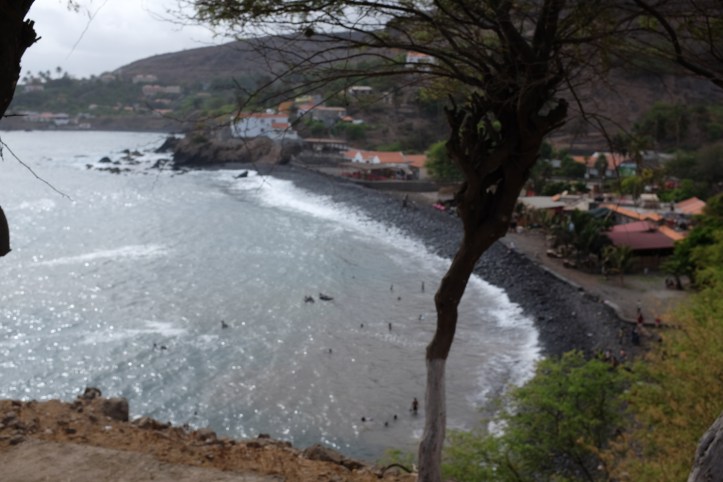
While in Praia (the capital), I visited the following places:
- Mercado de Sucupira – if you want to buy anything, this is the place
- Farol de D. Maria Pia – view of the Atlantic Ocean
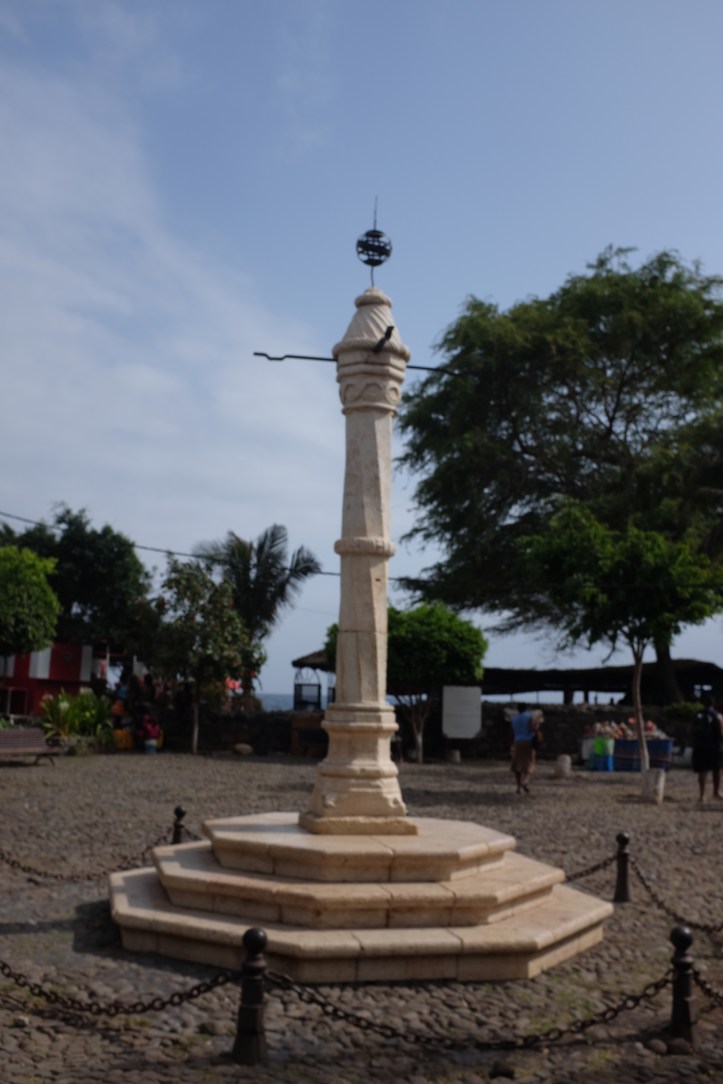
- Monumento de Diogo Gomes – the founder of the island
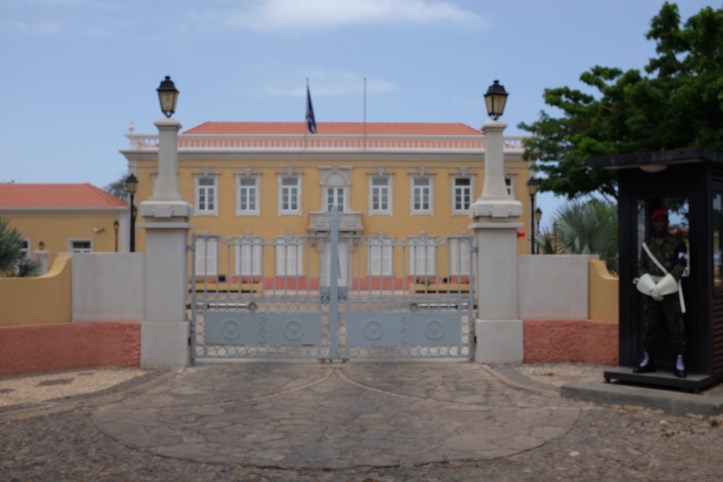
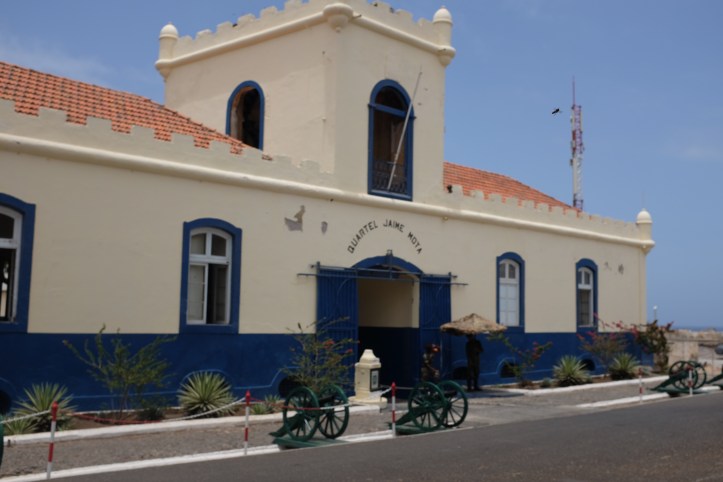
- Presidential Palace, Quartel Jaime Mota – are next to each other, but you cannot go inside
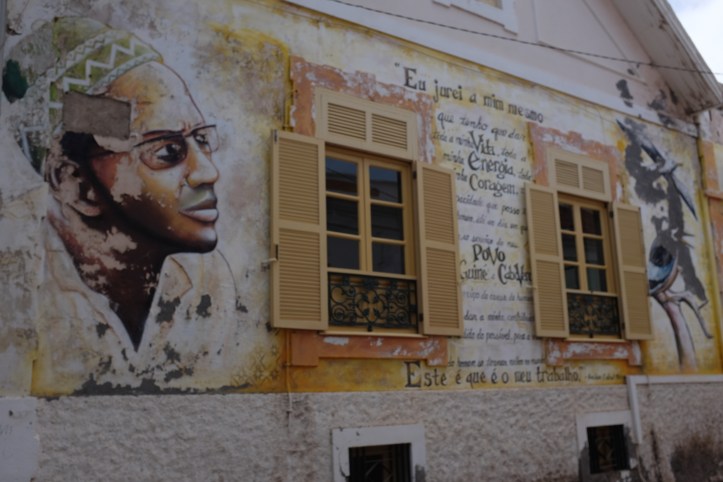
- Amilcar Cabral Museum – it was interesting to learn more about the history and what this person had done for Cabo Verde and Guinea-Bissau. There was a small admission charge for 200 Escudo and we had a free guide
- Fruit and vegetable market – this was located in downtown Praia and they have all kinds of fruits and vegetables. You may want to negotiate a bit, but they tend to provide the right pricing. I would probably negotiate around 25% more. If they quote 100, try to get it for 75. I believe this was about the right margin. There were food stands in the middle of the market, but I did not try the food after seeing how they washed the plates and utensils (yuck!)
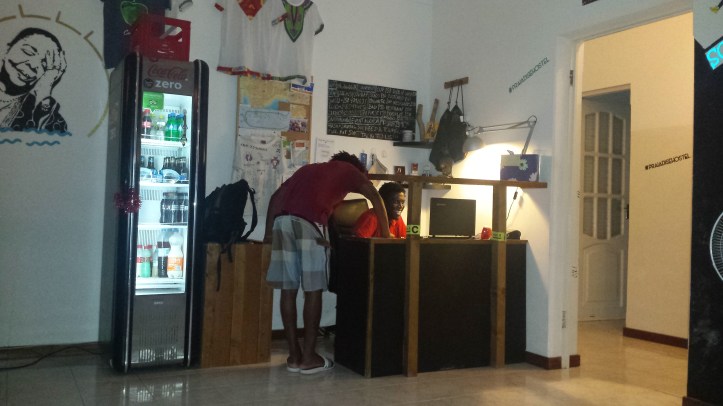
I enjoyed staying at Praiadise Hostel since the staff were really helpful about places to visit and they were around to hang out in the evening. The hostel had a dedicated tour guide, who would accompany you to the other villages within Santiago Island. If you do happen to walk around Praia area, you may be approached by tour guides showing you the official card. I’m not sure if they were real tour guides or not, but I did hear a bunch of foreigners staying at the hostel going on trips with them.
For some reason, they only approached women and at the end of the day, they want something more (I guess a passport to freedom to get out of Cabo Verde?). The cost to hire a guide for a day was around 30 Euros, but given that the average wage was 5 Euros per day for the locals, that seemed too much. I think you can bargain down further. Besides, you will have to pay for their food and transportation costs, which will end up being another 10-20 Euros more depending on where you go.
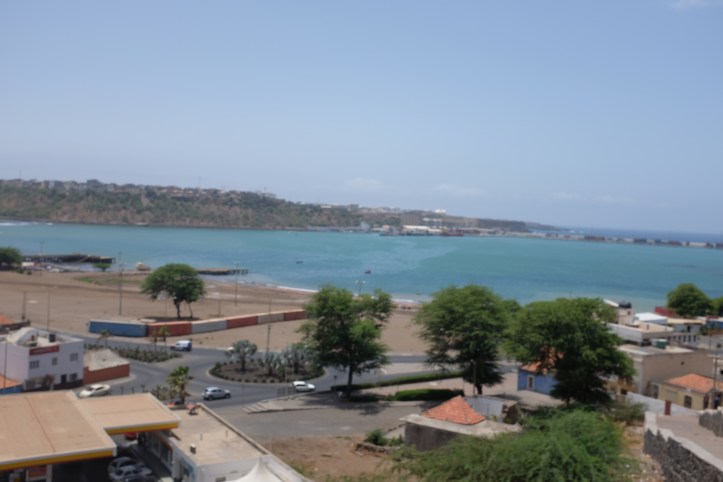
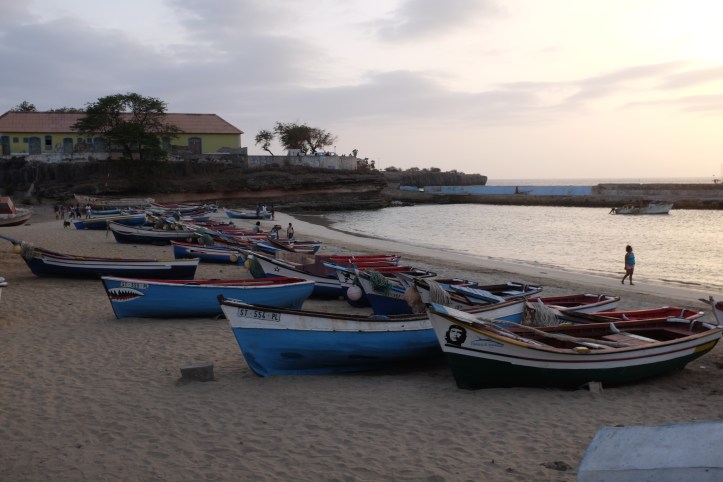
Visit to Tarrafal
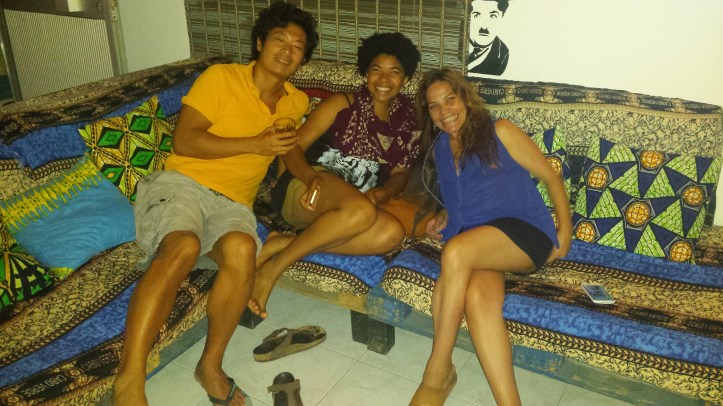
At the hostel, I befriended a bunch of people and I ended up going to Tarrafal with Irene from Spain for a night.
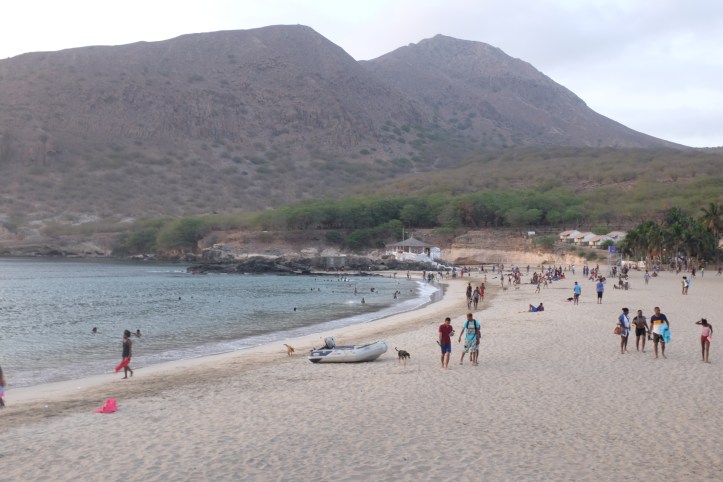
Getting to Tarrafal was not difficult, but took around 2.5 hours door to door. We had to catch a local bus which left when it was full and took around 2 hours from Praia to the main square in Tarrafal. It was a big change compared to Praia, since it was a small town and there were two beaches. We only saw a few foreigners and the beach was busy with locals.
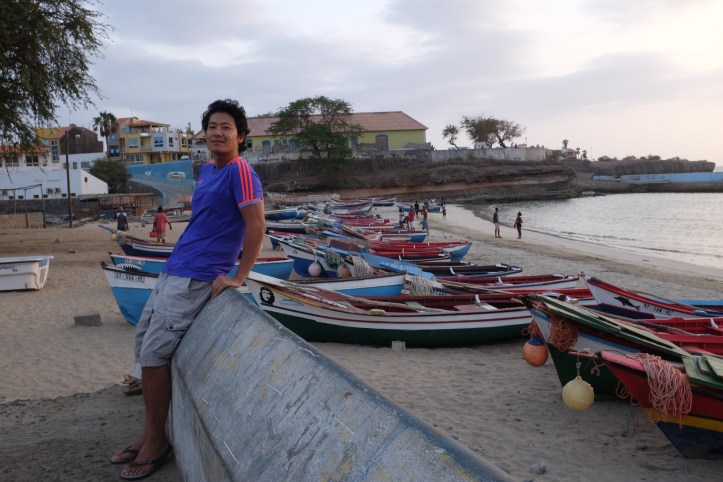
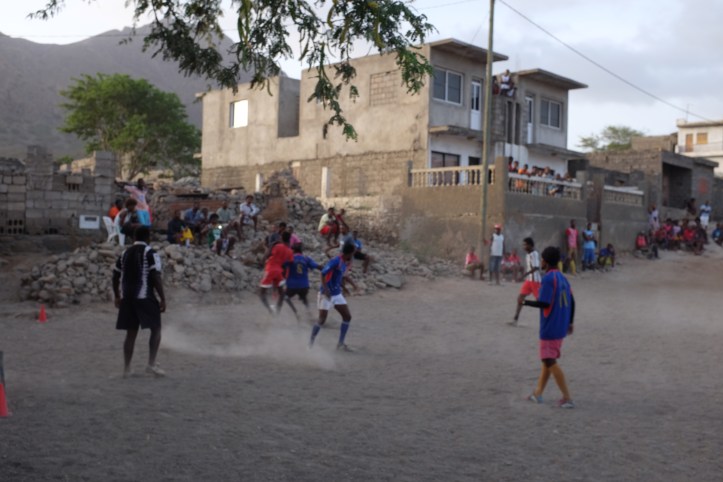
We walked around town for about 45 minutes (it literally takes that long or even less) and there was not much to see. I ended up playing soccer with the locals for about 1.5 hours and that was fun. Once again, I had not played for a while so I was out of breath after sprinting two lengths.
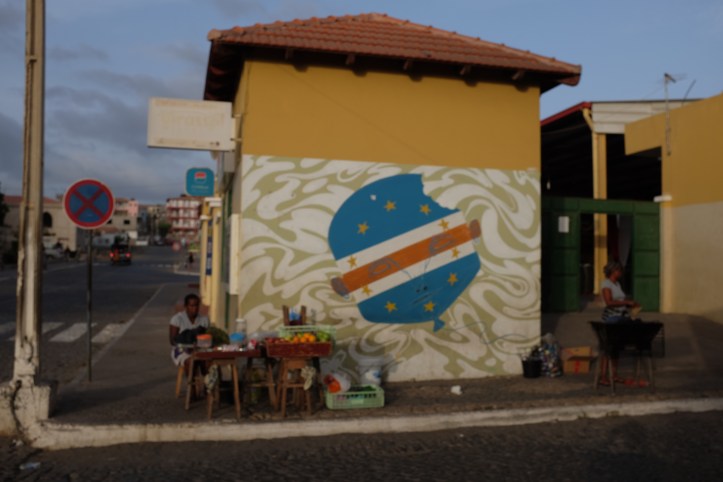
Our guesthouse room was pretty nice, we had individual rooms for 15 Euros. Another Spanish girl Cristina, who had been there earlier, recommended the place to us. Cristina did advise us about a lot of cockroaches in the room, but for some reason, I had none. I think Irene had some cockroaches in her room though. I believe I resolved my cockroach problem by lighting up the mosquito coil. The coil does work and always kills the mosquitos and flies (serious problem in mainland Africa).
The next morning, we made a trip out to the Chao Bom concentration camp. We had no idea such place existed and it was sad to learn about the history. The place was called the “Camp of the Slow Death,” which was created by the dictator, Salazar. This was where all the political prisoners from Angola, Guinea-Bissau, Portugal, and Cabo Verde were sent. The place was chosen because it was so isolated and to get fresh water, it required 5 hours of walking. The conditions that they lived in were absurd, but somehow, only around 32 people had died during the 38 years of existence (1936 to 1974).
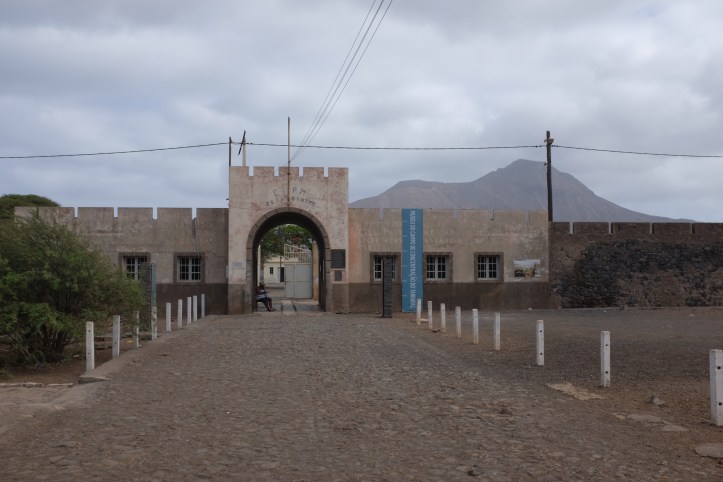
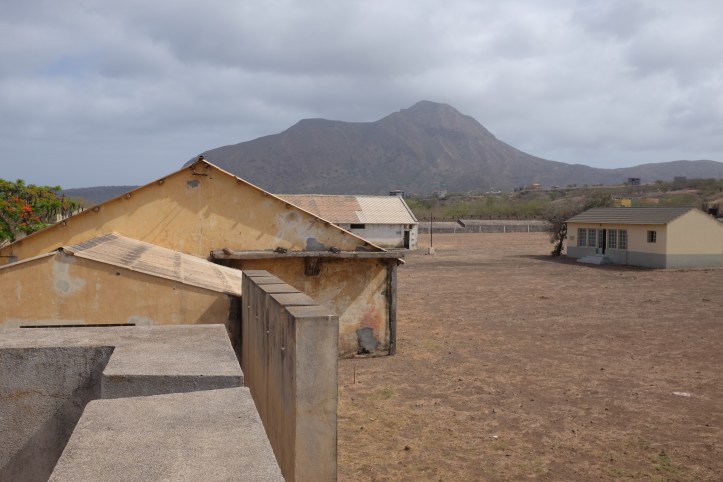
If you are in Tarrafal, you have to visit this place and it only costs 100 Escudos for the entrance. There were some things written in English, but there was no tour guide that day to tell us more about the history (some people had a tour guide).

That afternoon, we headed back to the Praidise Hostel in Praia. I spent the rest of the days visiting some other small villages like Assomada and Cidade Velha in Santiago Island and played football with the local team every day. I joined a 35 plus team for 3 days and they were really friendly and outgoing. They invited me to play all the time. What I really liked about Cabo Verde was that the people were genuinely friendly and they had an interest in foreigners. Although, I was called Chino a lot in the beginning, until I told them my name.

Food and Drinks
At the hostel, they provided breakfast and I ate there every day. The usual breakfast consisted of fruit, bread, butter, jam, eggs, and coffee or tea. I was told that they have a local dish for breakfast, but I did not get to try that.
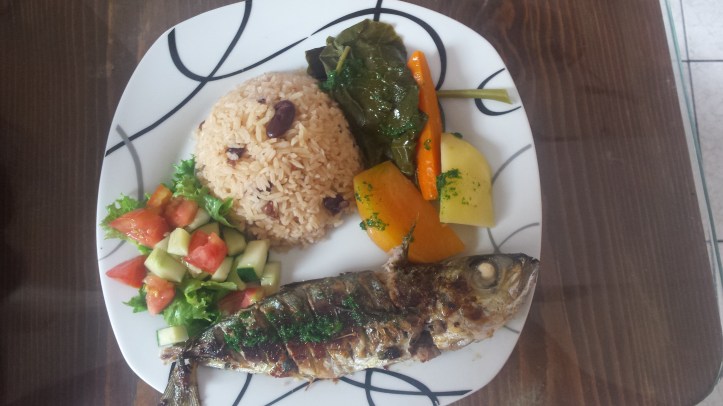
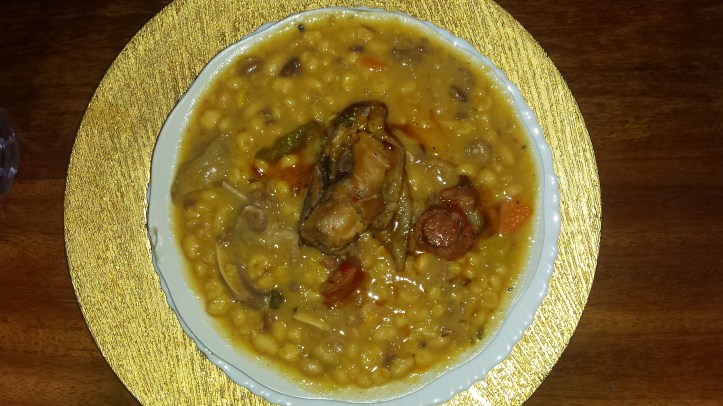
For lunch, I ate out all the time and it usually consisted of fish, rice and vegetables. The fish was grilled and tasty. I liked eating the fish from Cabo Verde and they do have an abundance. The other option was this stew that had all kids of meat and beans inside called Cachupa, which was also the national dish. I really liked this dish and ate it three times.
For dinner, I self-catered from the supermarket or ate at the churrasco restaurant close by. When I ordered meat, it was usually a piece of meat with a lot of rice, french fries, and a little bit of vegetables.
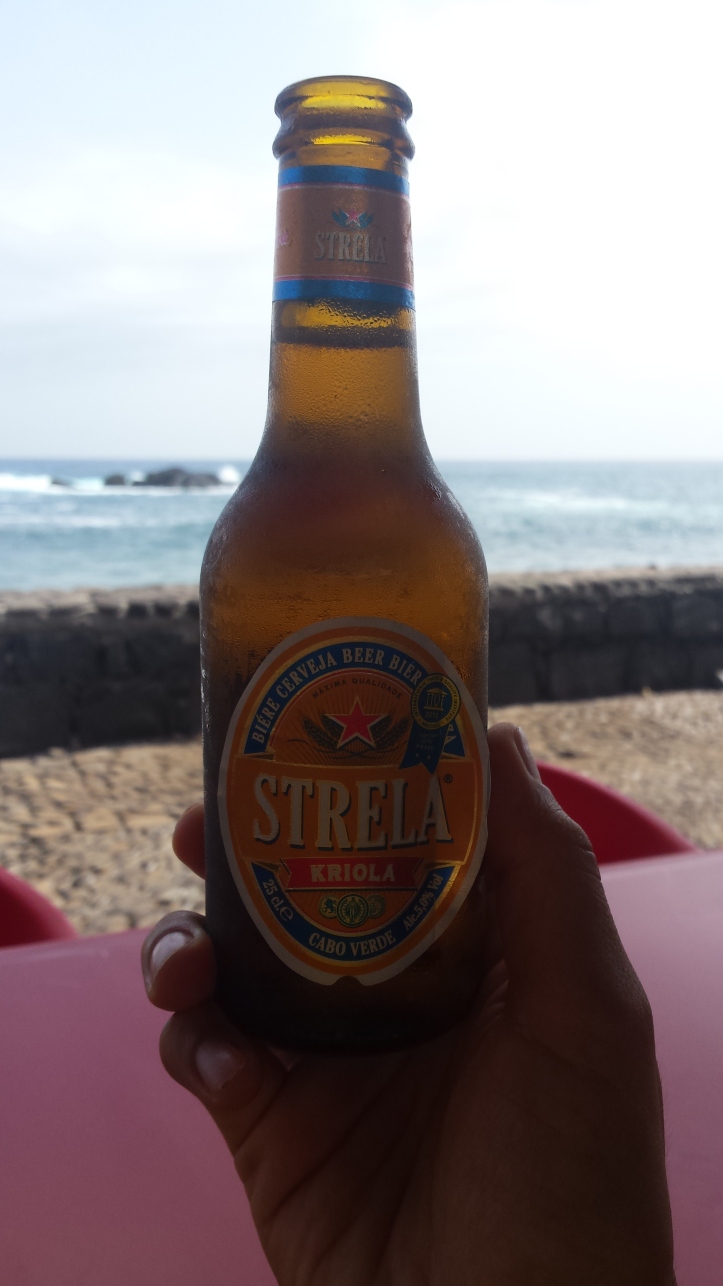
In terms of alcoholic drinks, I tried Strela, a local light beer. I’m not a big fan of beer, but it was refreshing drinking it by the beach. My favorite drink was ponch, which was local rum infused with fruits. My favorite ones were coconut and peanut flavored ponch. I only tried the ponch at the hostel, but did try all eight of the flavors available. The shot is definitely worth trying if you are in Cabo Verde.
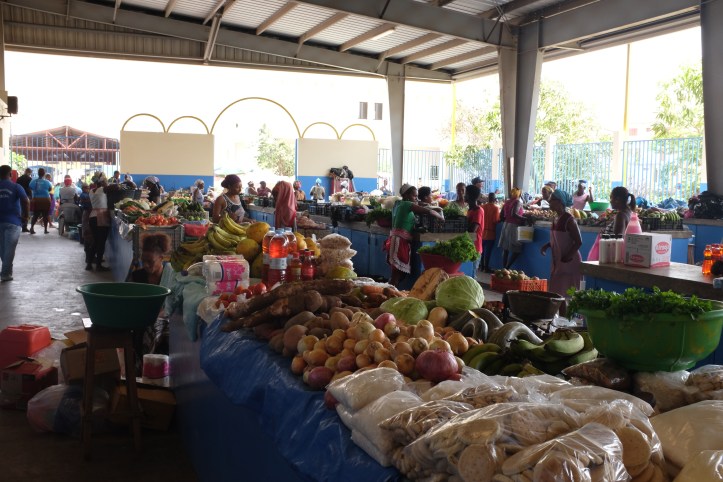
If you have a chance to go to the fruit market, the mangos and papayas were really delicious and I ate them every single day. They have a variety of other tropical fruits, but those two were my favorite.
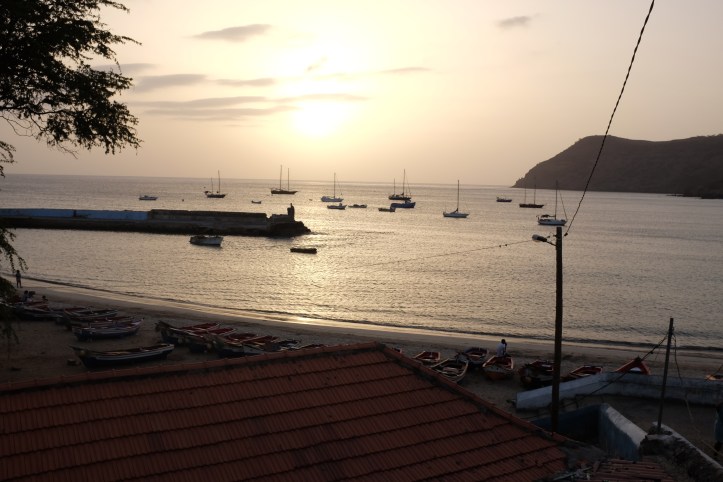
Overall, I really enjoyed Cabo Verde and would love to go back again and visit the other islands. I have to say that this was my favorite country in the Western part of Africa so far. Well, it did not really feel like Africa at all though!
General Information
- Currency – Cabo Verdean Escudos
- Money Exchange – There was a money exchange at the airport, but it was closed when I arrived at 6am. Besides, the exchange took a hefty commission so it was not worth changing money there. There were banks and street changers in Praia. Otherwise, there were ATM machines to withdraw money. I withdrew money at the airport and it was around 3 Euros for a transaction.
- Internet was widely available everywhere and sometimes free at public spaces.
- Language – Portuguese is the official language and a lot of people understood Spanish. Only a few people spoke English.
Where to stay
I stayed at the Praiadise Hostel for five nights and one night at a guesthouse in Tarrafal (I don’t remember the name, but the people at Praiadise Hostel will know). There was only one hostel in the Praia area, but several pensions, guesthouses and hotels.
Where to eat
There were not that many restaurants on the island, but if you look around or ask someone, there will always be one. Most of the restaurants can be either a hit and miss. The food will most likely be Portuguese and the cost can vary from 4 to 10 Euros for a meal. There were cheap meals near the center of Praia for around 4 Euros.
Tips
- If you plan on visiting Cabo Verde, it may be wise to allocate at least two weeks to see a couple of the islands. I recommend planning on where to go ahead, instead of doing things last minute since the ferry times and days were limited. Flights within the country was pretty expensive, around 85 Euros one way.
- There were plenty of local buses, but it only left when it was full. You can rent cars for competitive rates around 30 to 40 Euros per day, but you have to book them in advance. I visited during the slowest month and for some reason, there were no cars. Who was renting them? No idea.
- Buying local fruits and vegetables were economical. Most of the meat was frozen, while the fish was fresh.
- A taxi from the airport to the center during normal hour is 7 Euros and 10 Euros after 10pm and before 6am.
- If you take taxis within the city, they should be no more than 150 Escudos.
I visited in July 2017.
 Pinche Travels